

Why Healthy Zucchini Plants Suddenly Wilt: A Garden Detective's Guide
Why Healthy Zucchini Plants Suddenly Wilt: A Garden Detective’s Guide
The dramatic zucchini collapse is frustrating because several problems can look alike. Heat stress, dry soil, root injury, disease, squash bug feeding, and a squash vine borer can all produce wilt. The fastest path to a useful answer is to treat the garden like a scene that contains evidence.
This second guide focuses on diagnosis: what to look for, what each clue means, and which conclusions the clue does not justify. It is based on the project’s long-form transcript and source report, with pesticide and pollinator claims checked against extension guidance.
Begin with the wilt test
First check the soil several inches below the surface. A dry root zone can explain a plant that droops during intense heat. If the soil is adequately moist, compare the runners. Is the whole plant affected, or only one stem? Then inspect the base for splitting, holes, and tan-to-orange frass.
A vine borer larva feeds inside the stem, so a hole plus frass is much stronger evidence than daytime wilt alone. A plant that perks up overnight may have damaged water-conducting tissue, but temperature and soil moisture can create the same pattern. Diagnosis should combine multiple clues.
Use eggs to separate two different pests
Bronze or orange-brown egg clusters attached to the underside of leaves usually point toward squash bugs. Vine borer eggs are laid singly or in small groups around stems and leaf stalks and can be much harder to spot. Confusing the two can send treatment in the wrong direction.
For squash bugs, regular hand removal can interrupt the next generation before dozens of nymphs begin feeding. Tape works well for lifting eggs. Adults and nymphs can be collected into soapy water. Remove badly infested debris from the garden rather than leaving it beside the plant.
Investigate the flowers
Cucumber beetles often hide and feed in blossoms. Their damage may appear as ragged holes on leaves, scarred fruit, or injured flowers. Seedlings deserve special attention because a small plant can lose a large share of its leaf area quickly.
When beetles are present, sanitation, barriers on young plants, crop rotation, and monitored trap crops can be combined. A trap crop is not a magic decoy. It is an intentionally attractive planting that concentrates pests so the gardener can manage them there. Blue Hubbard squash has extension support as a cucurbit trap crop; results depend on timing, layout, and active monitoring.
Build defenses in the right order
1. Scout
Inspect early and often. Search leaves, stems, crowns, and flowers. Record what you see instead of treating every wilted plant the same way.
2. Remove
Use hand-picking, egg removal, pruning, and disposal of infested debris while populations are small. These methods are targeted and preserve beneficial insects.
3. Exclude
Use row cover or fine insect netting on young plants before pests arrive. Seal the edges. Remove the barrier for pollination, or hand-pollinate while the cover remains in place.
4. Time plantings carefully
A later succession planting may avoid part of a local pest peak, but a late-August or September sowing is not universally suitable. Zucchini needs time to mature before frost, and insect life cycles differ by climate. Use local frost dates and extension recommendations before relying on a fall crop.
5. Treat only when justified
If a labeled pesticide is needed, match it to the identified pest and the zucchini crop. Bt products are strain-specific and are not an effective rescue for a vine borer already protected inside a stem. Spinosad can affect bees when they contact wet residues. Applying at a time when bees are not foraging may reduce exposure, but the label remains the authority. Never spray open blooms unless the label expressly permits it.
What about companion plants and scent masking?
Basil, dill, sage, thyme, and other aromatic plants can add diversity and habitat to a garden. Evidence that a particular companion plant reliably repels the Big Three is limited. Likewise, the source report’s essential-oil formula should not be treated as a verified control recommendation. Oils and detergents can burn leaves, especially in heat.
The most dependable strategy is less dramatic: keep plants appropriately watered, inspect them regularly, remove pests early, use physical barriers correctly, and reserve pesticides for a clearly identified problem.
Watch the full guide and the one-minute field check
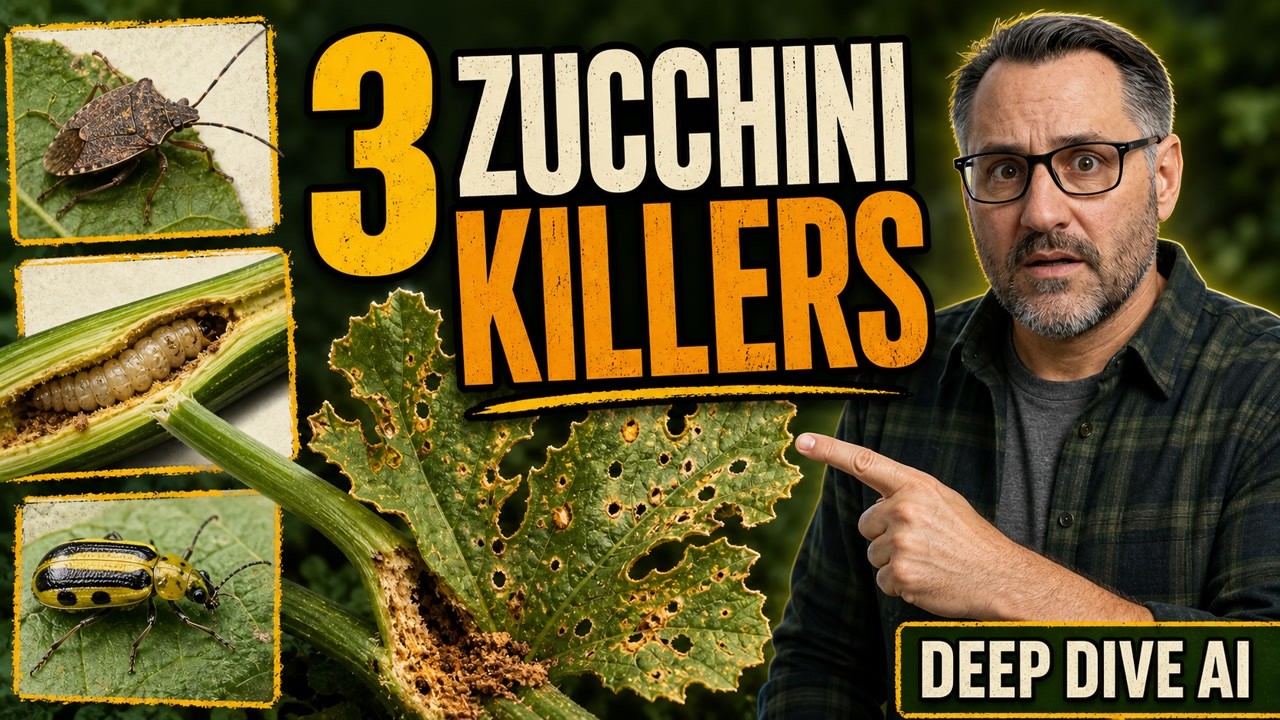
Full video: 3 Zucchini Pests That Can Destroy Your Harvest
Short video: 3 Zucchini Pests in 60 Seconds
Long presentation: Surviving the Squash Saboteurs with the original slide deck
A useful diagnostic tool
XLUX Soil Moisture Meter can help answer the first diagnostic question: is the root zone actually dry? It cannot tell you whether a plant has squash bugs, borers, beetles, or disease, so pair the reading with a visual inspection.
As an Amazon Associate I earn from qualifying purchases.
Verified references
- University of Minnesota Extension: Squash vine borers
- University of Minnesota Extension: Squash bugs
- University of Minnesota Extension: Cucumber beetles
- University of Minnesota Extension: Companion planting
This article is educational and is not a substitute for local extension advice or pesticide-label directions.


Comments
Post a Comment