

The Zucchini Survival Guide: How to Outsmart the Big Three Pests
The Zucchini Survival Guide: How to Outsmart the Big Three Pests
A zucchini plant can look unstoppable one day and collapse the next. When that happens, the most useful response is not a random spray. It is a careful inspection for three common suspects: squash bugs, squash vine borers, and cucumber beetles.
This guide turns the project transcript and source report into a practical scouting plan. The goal is early identification, physical control where possible, and careful use of any labeled treatment. No single trick guarantees a pest-free crop, but a layered approach can prevent a small problem from becoming a lost planting.
Watch the complete Deep Dive AI guide
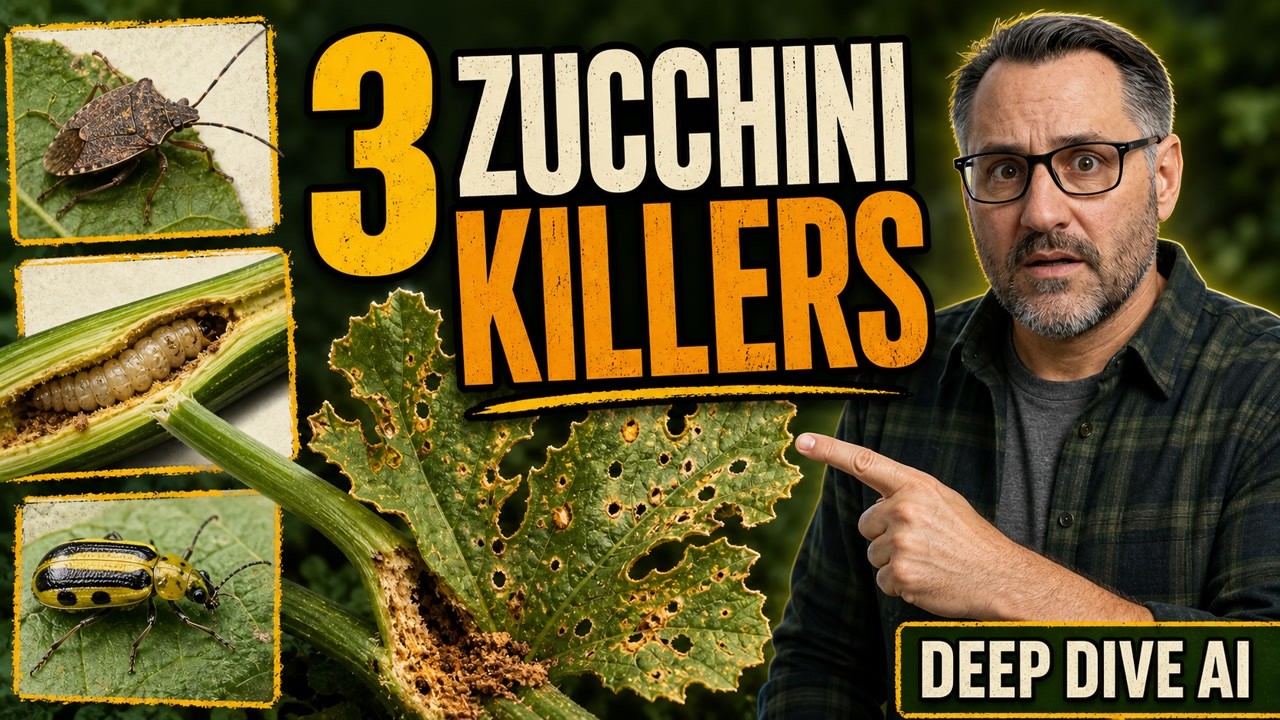
Watch the complete 19-minute audio presentation with the original slide deck.
1. Squash bugs: inspect the leaf undersides
Squash bugs pierce plant tissue and feed on sap. Adults can resemble stink bugs, while young nymphs often appear in groups. One of the easiest clues is a cluster of bronze or orange-brown eggs, commonly placed on the underside of a leaf near a vein.
Start with a slow inspection. Turn leaves over, check stems, and look near the crown. Small infestations can often be reduced by removing egg masses with tape, dropping adults and nymphs into soapy water, or pruning a badly infested leaf without stripping the plant. Boards placed near plants can also provide an overnight hiding place that makes morning collection easier.
Floating row cover or insect netting can exclude adults early in the season, but the edges must be sealed. Covers also block pollinators, so remove them when female flowers need pollination unless you are hand-pollinating.
2. Squash vine borers: read the stem
Sudden wilting can have several causes, including dry soil, root damage, disease, or a squash vine borer. The borer is the larva of a clearwing moth. After hatching near the plant base, the larva tunnels into the stem and interferes with water movement.
Look for a small hole and a damp, sawdust-like material called frass near the crown. Wilting that begins on one runner or becomes severe during the heat of the day is another warning, but it is not proof by itself. Check soil moisture and examine the stem before deciding on a cause.
Prevention is more dependable than trying to kill a larva already protected inside the stem. Row covers can help before flowering, and some gardeners wrap or protect young stem bases. If a borer is found early, careful stem surgery and covering the injured section with moist soil may allow new roots to form, although recovery is not guaranteed. Bacillus thuringiensis, or Bt, should not be presented as a reliable rescue after a larva is established inside the stem.
3. Cucumber beetles: protect young growth and flowers
Striped and spotted cucumber beetles feed on leaves, stems, blossoms, and fruit. They can be especially damaging to seedlings, and some species can spread bacterial wilt. Check blossoms and the newest growth, where beetles may gather.
Early barriers, removing crop debris, rotating cucurbit planting areas when space permits, and promptly managing weeds can reduce pressure. Trap cropping can be useful in an integrated plan, but it is not as simple as planting cucumbers a fixed distance away and expecting every beetle to leave. Extension research more commonly identifies highly attractive squash varieties such as Blue Hubbard as trap crops, and the trap planting itself must be monitored and managed.
Be cautious with sprays and homemade recipes
The source material discusses spinosad, Bt, essential oils, and evening application. These ideas need important limits. A pesticide may be organic and still harm pollinators or other beneficial insects. Evening application can reduce direct exposure, but it does not make every product harmless after it dries. Always use a product specifically labeled for the pest and crop, follow the current label, and avoid spraying open flowers or foraging bees.
Homemade peppermint, lemongrass, and dish-soap mixtures are sometimes shared as scent masks, but the project sources do not establish a dependable control rate or plant-safe recipe. Concentrated oils and soaps can injure foliage. Treat companion planting and scent masking as experiments, not substitutes for scouting and proven controls.
A simple seven-day defense routine
- Inspect both sides of leaves two or three times each week.
- Check the crown and lower stem for holes or frass.
- Look inside blossoms for cucumber beetles.
- Confirm soil moisture before blaming an insect for wilt.
- Remove egg masses and small infestations immediately.
- Use barriers early and remove them when pollination is required.
- If treatment is necessary, identify the pest first and follow the label exactly.
Recommended garden tool
XLUX Soil Moisture Meter — useful for checking root-zone moisture while separating drought stress from possible insect damage. It does not identify pests.
As an Amazon Associate I earn from qualifying purchases.
Sources and safety notes
- University of Minnesota Extension: Squash bugs
- University of Minnesota Extension: Squash vine borers
- University of Minnesota Extension: Cucumber beetles
Educational gardening information only. Conditions, pest cycles, and labeled products vary by location. Follow local extension guidance and the current pesticide label.


Comments
Post a Comment